 eigenwallet
Exchange · DEX
eigenwallet
Exchange · DEX

Azteco
Communityazte.co
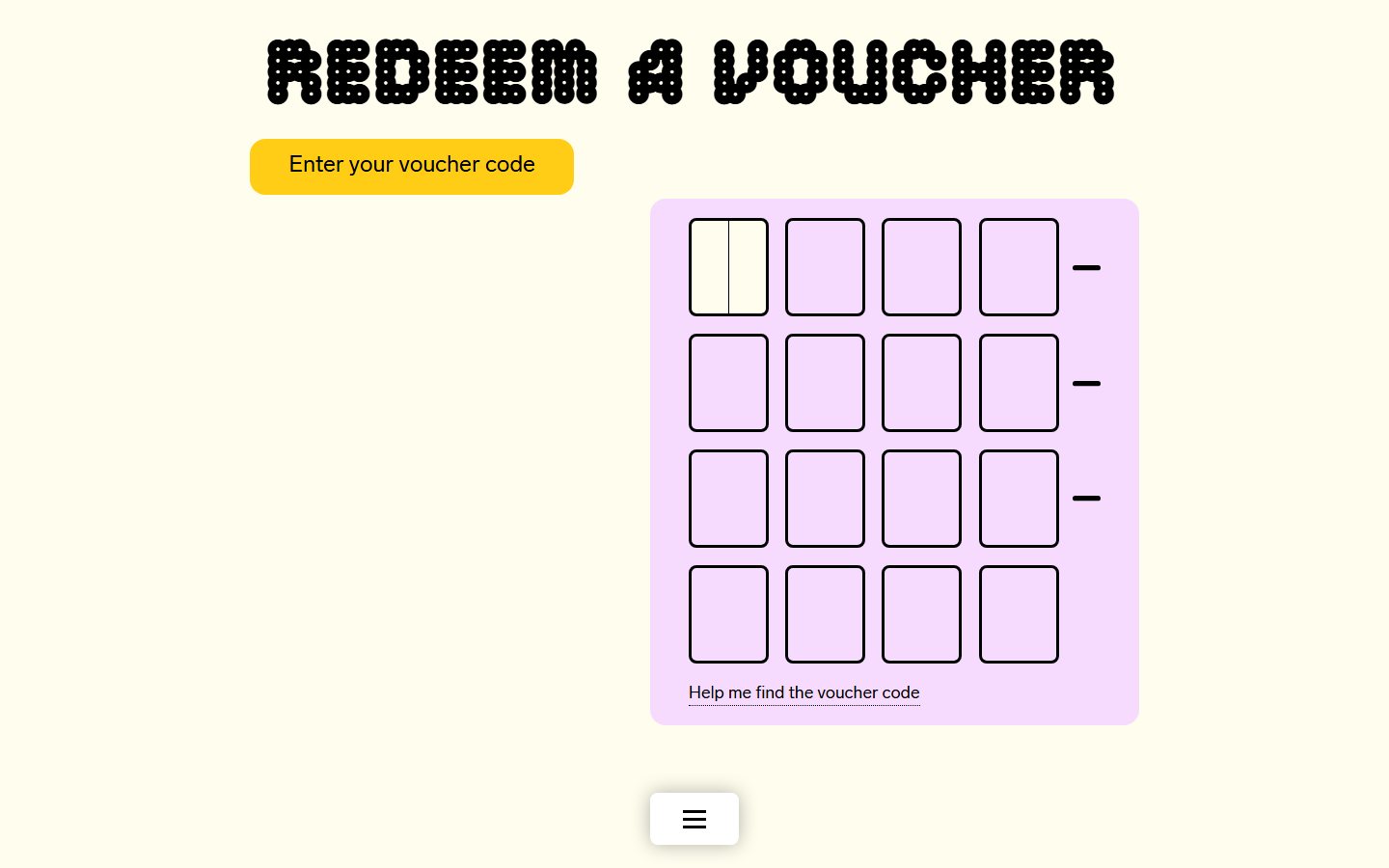
Buy Bitcoin or Lightning vouchers in online stores or some physical stores, then redeem them directly to your wallet, no account or registration needed. The learn article states absolutely no identification, their terms reserve request for identification (possibly for support).
Live preview
azte.co
▶
https://azte.co/redeem
Review
EditorialOverview
Azteco operates a voucher-based model for acquiring Bitcoin and Lightning Network sats. Users purchase prepaid vouchers—either online through partner storefronts or in select physical retail locations—then redeem them directly to a self-custody wallet via the azte.co/redeem portal. The pitch is frictionless: no account creation, no email harvest, no app download. For privacy-seeking buyers, this structure looks compelling at first glance. In practice, Azteco sits in an awkward middle ground: the front-end experience is genuinely lightweight, but the legal backend contains enough wiggle room to undermine the "no-KYC" branding that circulates in privacy forums.
The service falls under the broader Exchange category because it converts fiat into cryptocurrency, even though it lacks order books, trading pairs, or custody features typical of centralized exchanges. Its overall utility depends heavily on how you source vouchers—cash purchases at brick-and-mortar counters carry different surveillance footprints than online checkout flows tied to payment processors.
Privacy & KYC
Azteco's marketing and educational materials emphasize that no identification is required to redeem a voucher. The redemption flow itself is indeed bare-bones: enter the voucher code, paste a Bitcoin or Lightning address, and broadcast the transaction. However, the company's terms of service reserve the right to request identification, particularly in support or dispute scenarios. This creates a tiered KYC structure—what we classify as L3—where the baseline interaction is document-free but identity verification can be triggered post-hoc.
- KYC tier: L3 — Tiered. No ID for standard redemption; possible ID demand for support tickets, large volumes, or regulatory pressure.
- Email required: No. The redemption form does not ask for contact details.
- IP logging: Not explicitly disclosed, but standard web infrastructure almost certainly retains connection metadata.
- Surveillance vectors: Online voucher purchases flow through traditional payment rails (credit cards, bank transfers) that are already KYC'd upstream; physical cash buys at retail depend on store policies and local CCTV.
The gap between "no ID at redemption" and "no KYC ever" is meaningful. A user who buys a voucher with a surveilled debit card has effectively de-anonymized the purchase before reaching Azteco's interface. Only cash acquisitions at indifferent retail points offer plausible deniability, and even then the voucher code itself becomes a traceable serial if the issuer maintains redemption records.
Supported assets & payments
Azteco keeps its asset list intentionally narrow. Redemptions settle to Bitcoin on-chain or via the Lightning Network, with the latter offering faster, cheaper transfers for smaller amounts. The voucher denomination is fiat-anchored—users pay in local currency equivalents—but the underlying delivery is always BTC or Lightning sats.
Payment methods for acquiring vouchers split along the online/physical divide:
- Fiat online: Bank cards, bank transfers, and regional digital payment methods through integrated storefronts.
- Cash: Paper money at participating physical retail locations, though geographic coverage varies significantly by market.
The Lightning option is a genuine differentiator for micro-purchases, letting users redeem sub-$50 vouchers without on-chain fees eating the principal. That said, Azteco does not support altcoins, stablecoins, or any form of crypto-to-crypto exchange. It is a one-way fiat-to-BTC on-ramp with no off-ramp functionality.
Security & custody
Azteco is non-custodial by design. Vouchers do not represent balances held on the platform; they are single-use claims that sweep directly to the user's provided address. This eliminates the honeypot risk that plagues centralized exchanges, where pooled user funds attract hackers and compel invasive verification regimes. There is no Azteco wallet to drain, no seed phrase to leak, no withdrawal delay to endure.
The security model therefore shifts to voucher integrity. A stolen or intercepted code is as good as stolen cash—redeemable by anyone who possesses it. Users must treat physical vouchers and digital receipts with the same care they would apply to paper currency. Azteco's site offers no multi-sig, no timelocks, and no recovery mechanisms; lost codes appear to be lost value. The company does not publish audit reports or bug bounty programs, which limits external validation of their issuance and redemption infrastructure.
Who it's for — verdict
Azteco earns a 4/10 overall in our directory scoring, dragged down by a 35/100 privacy score and a middling 50/100 trust score. The product works as advertised for quick, small-scale Bitcoin acquisition, but the privacy proposition is weaker than surface-level claims suggest. The terms-of-service escape clause on identification, combined with the reality that most online voucher purchases inherit KYC from payment processors, means Azteco is not a reliable tool for high-assurance anonymity.
It suits casual users who want Bitcoin without exchange accounts, travelers in regions with thin crypto infrastructure, or gift-givers who want to introduce others to self-custody. It does not suit journalists, activists, or anyone whose threat model requires provably unlinkable acquisition. For that cohort, peer-to-peer cash trades or fully non-custodial swaps with stronger privacy guarantees remain preferable. Azteco's voucher model is convenient; convenience and strong privacy rarely coexist.
Community summary
Azteco offers Bitcoin and Lightning vouchers through retail and online channels, promising redemption without registration—though its terms reserve broader identity checks that muddy the no-KYC claim.
Pros
- + Redemption requires no account, email, or app download
- + Direct-to-wallet settlement eliminates custodial risk
- + Lightning Network support enables low-fee micro-purchases
- + Cash voucher option preserves plausible deniability at retail
- + Simple UX suitable for Bitcoin beginners
Cons
- − Terms reserve right to demand ID, undermining no-KYC claims
- − Online voucher purchases inherit upstream payment surveillance
- − No altcoin or stablecoin support; Bitcoin-only
- − No published security audits or transparency reports
- − Limited retail footprint for cash purchases in many regions
Attributes
2 signalsCautions
Community contributed
Shotgun KYC
P-15
Related
4 services
eigenwallet
Exchange · DEX
 Bisq
Exchange · P2P
Bisq
Exchange · P2P
 BasicSwap
Exchange · P2P
BasicSwap
Exchange · P2P
 RoboSats
Exchange · P2P
RoboSats
Exchange · P2P