 eigenwallet
Exchange · DEX
eigenwallet
Exchange · DEX

hurricane
Communityhurricane.money
Non-custodial anonymous transactions on Ethereum, BSC and Arbitrum
Live preview
hurricane.money
▶
https://hurricane.money
Review
EditorialOverview
Hurricane positions itself as a privacy-centric exchange solution for users seeking to transact across major EVM chains without surrendering personal information. The service targets a growing segment of the crypto market that prioritizes financial anonymity over regulatory compliance, operating in the increasingly contested space between legitimate privacy tools and services that attract regulatory scrutiny. At its core, Hurricane promises to let users move value through Ethereum, Binance Smart Chain and Arbitrum without creating the permanent identity trails that conventional exchanges demand.
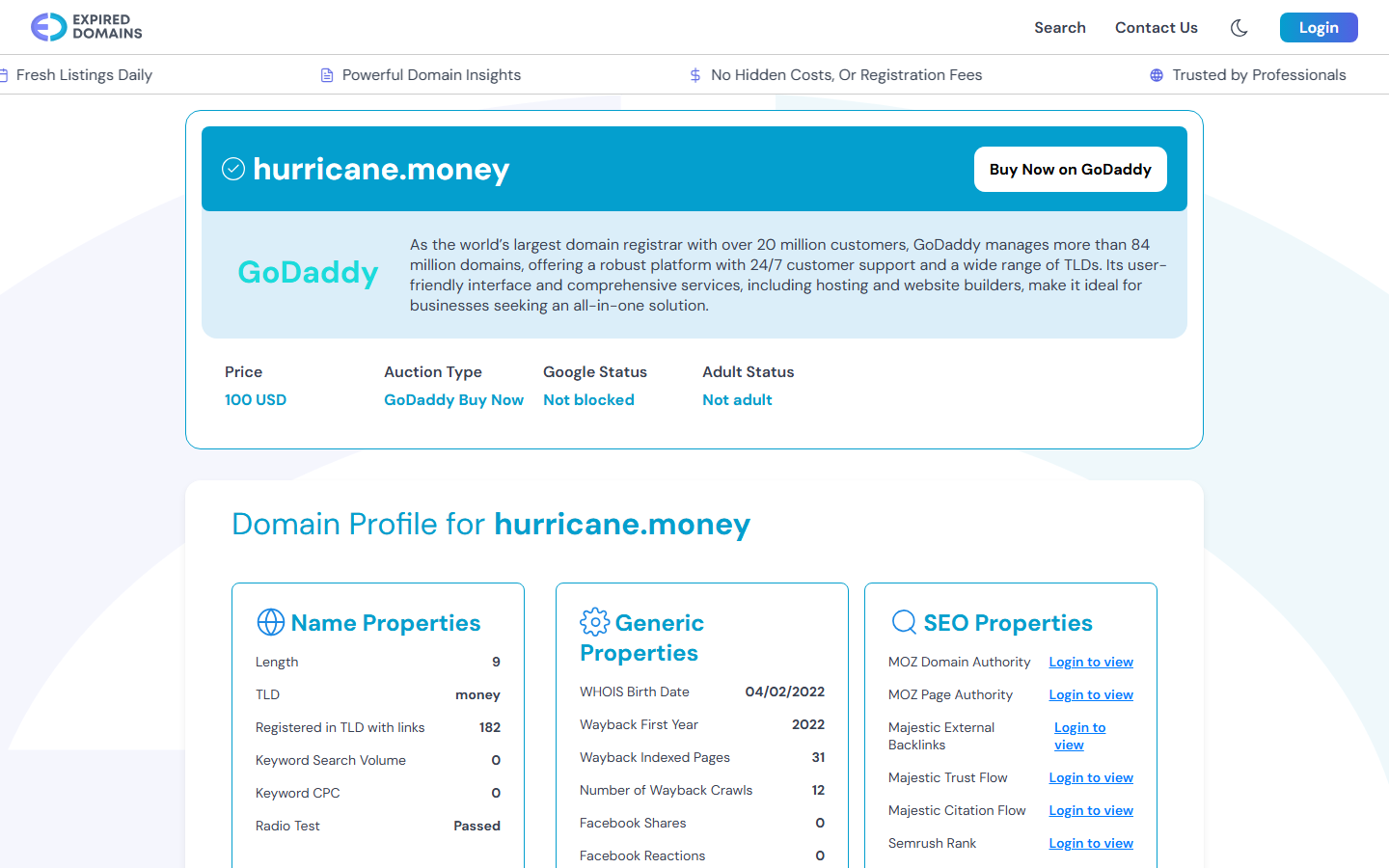
However, significant caveats shadow this offering. Our research indicates that hurricane.money as a domain is currently listed for sale through GoDaddy at $100 USD, with the domain originally registered in April 2022 and showing minimal historical web presence. This raises immediate questions about whether the service remains actively maintained or has transitioned to a different operational status. The disconnect between the advertised privacy exchange functionality and the domain's current commercial availability represents a critical red flag that prospective users must weigh against any theoretical benefits.
Privacy & KYC
Hurricane's primary appeal rests on its L1 — Anonymous classification, representing the most permissive tier in privacy terminology: pseudonymous access with no personal data collection. This theoretically means no government ID uploads, no proof-of-address requirements, no facial recognition scans, and no banking credential verification. For users fleeing increasingly invasive exchange KYC regimes, this zero-friction onboarding represents genuine differentiation.
- KYC tier: L1 Anonymous — no personal data required
- Email requirement: None specified
- IP logging: Status unclear from available documentation
- On-chain privacy: Non-custodial architecture prevents exchange-side fund seizure
The privacy score of 60/100 reflects substantial room for improvement, likely penalizing the service for opacity around operational specifics, missing transparency reports, and the fundamental uncertainty about active development. True anonymity in 2026 demands more than policy promises — it requires verifiable infrastructure, consistent uptime, and demonstrated resistance to correlation attacks that sophisticated blockchain analysts deploy.
Supported assets & payments
Based on authoritative source data, Hurricane explicitly supports three blockchain ecosystems: Ethereum, Binance Smart Chain (BSC), and Arbitrum. This coverage hits the most significant EVM-compatible environments where privacy demand concentrates, though notable omissions include Bitcoin, Monero, Solana, and newer Layer-2 networks like Base or Optimism that have gained substantial traction through 2026.
The specific token support within these chains remains unspecified in available documentation. Users should expect native chain assets (ETH, BNB) and major ERC-20/BEP-20 tokens, but without verified token lists or documented liquidity sources, planning precise transactions becomes speculative. The service appears designed for same-chain or cross-chain EVM swaps rather than fiat on/off ramps — no credit card, bank transfer, or payment processor integration is indicated.
Security & custody
Hurricane adopts a non-custodial architecture, meaning users retain control of private keys throughout transactions rather than depositing funds to exchange-controlled wallets. This design choice eliminates the catastrophic exchange-hack risk that has plagued custodial platforms, where billions in user assets have evaporated through 2026. Smart contracts or similar trust-minimized mechanisms presumably mediate swaps, though contract audit status, multisig configurations, and emergency pause functionality remain undocumented in our research.
The trust score of 50/100 signals substantial skepticism from our assessment framework. Contributing factors likely include the domain sale status, absence of verifiable team identity, missing security audit documentation, and limited operational transparency. Non-custodial architecture protects against one failure mode but cannot compensate for unaudited contract code, potential front-running vulnerabilities, or simple abandonment by anonymous operators. Users must conduct personal due diligence beyond any single review.
Who it's for — verdict
Hurricane occupies an uncomfortable position in the 2026 privacy landscape: conceptually aligned with legitimate user needs but operationally uncertain. The service suits technically proficient users comfortable with EVM wallets, willing to accept elevated risk for theoretical anonymity, and capable of verifying contract behavior independently. It does not suit beginners, large-volume traders requiring liquidity guarantees, or anyone unable to absorb total fund loss.
The overall score of 6/10 reflects this tension — above outright scams but well below established alternatives with verifiable operations. Privacy-conscious users should treat Hurricane as a research subject rather than a primary tool until active development, transparent team engagement, or third-party security validation emerges. For immediate no-KYC needs, cross-referencing multiple directory sources and favoring services with demonstrated 2026 uptime remains prudent.
Community summary
Hurricane offers non-custodial, pseudonymous transactions across Ethereum, BSC and Arbitrum without requiring identity verification, though its operational status and trust metrics raise practical concerns for privacy-focused users.
Pros
- + True pseudonymous access with zero identity documentation required
- + Non-custodial design prevents exchange-side fund confiscation
- + Multi-chain EVM coverage across Ethereum, BSC and Arbitrum
- + No email or personal data collection at onboarding
Cons
- − Domain actively listed for sale, raising operational status questions
- − No verifiable security audits or transparent team identity
- − Limited documentation on supported tokens and fee structures
- − Below-average trust score reflecting substantial due diligence gaps
Attributes
2 signalsStrengths
No KYC mention
P+15
Cautions
Community contributed
Related
4 services
eigenwallet
Exchange · DEX
 Bisq
Exchange · P2P
Bisq
Exchange · P2P
 BasicSwap
Exchange · P2P
BasicSwap
Exchange · P2P
 RoboSats
Exchange · P2P
RoboSats
Exchange · P2P
User reports
★ 5/5 · 1 ratings
Swapuz ✅ (Support at Swapuz)
5/5
Hurricane is like a black hole for your transactions: Ethereum, BSC, Arbitrum — gone without a trace. Non-custodial, nameless, fast. Perfect for those who leave no footprints.