 nadanada
VPN · SMS
nadanada
VPN · SMS

Routstr
Communitychat.routstr.com
Decentralized protocol for permissionless, private, and censorship-resistant AI. Built on Nostr.
Live preview
chat.routstr.com
▶
https://chat.routstr.com
Review
EditorialOverview
Routstr is a decentralized, peer-to-peer gateway to artificial intelligence that strips away every conventional gatekeeper. Built on the Nostr protocol and monetized through Bitcoin's Lightning Network, it offers something almost unheard of in the AI landscape: immediate, permissionless access to models without surrendering an email address, phone number, or government ID. The platform operates as open-source infrastructure rather than a centralized service, meaning anyone can inspect the code, run a node, or offer compute. For privacy advocates and censorship-resistant technology enthusiasts, this architecture represents a meaningful departure from the surveillance-heavy defaults of mainstream AI providers.
What makes Routstr particularly notable in 2026 is its refusal to compromise on pseudonymity. While competitors increasingly enforce identity verification under regulatory pressure, Routstr maintains an L0 trustless tier—no account creation flow exists at all. Users connect their Lightning wallet and begin querying models immediately. This design choice sacrifices some convenience features—there are no persistent conversation histories tied to profiles, no password recovery flows—but gains resilience against data breaches, subpoenas, and platform censorship.
Privacy & KYC
Routstr earns its 83/100 privacy score through structural minimalism rather than policy promises. The service collects nothing because it cannot: there is no registration system, no email field, no KYC workflow of any kind. This is genuine zero-tier access, not merely "lenient" verification. The L0 classification reflects a protocol-level commitment to anonymity that would require fundamental architectural changes to violate.
- No account required: The absence of any signup mechanism eliminates the primary attack vector for identity correlation.
- No email collection: No communication channel exists for password resets, marketing, or legal demands.
- IP logging status unconfirmed: While the protocol itself is peer-to-peer, users accessing via the chat.routstr.com gateway should assume standard web server logging may apply at the transport layer; Tor or VPN use is prudent for maximal separation.
- Nostr foundation: Built on the decentralized Nostr relay network, which uses cryptographic key pairs rather than identity documents for authentication.
The 60/100 trust score reflects the inevitable trade-off of radical decentralization: without a corporate entity to sue or regulate, there is also no entity to hold accountable for service quality, no insurance fund, and no formal dispute resolution. This is privacy by design, not by policy guarantee.
Supported assets & payments
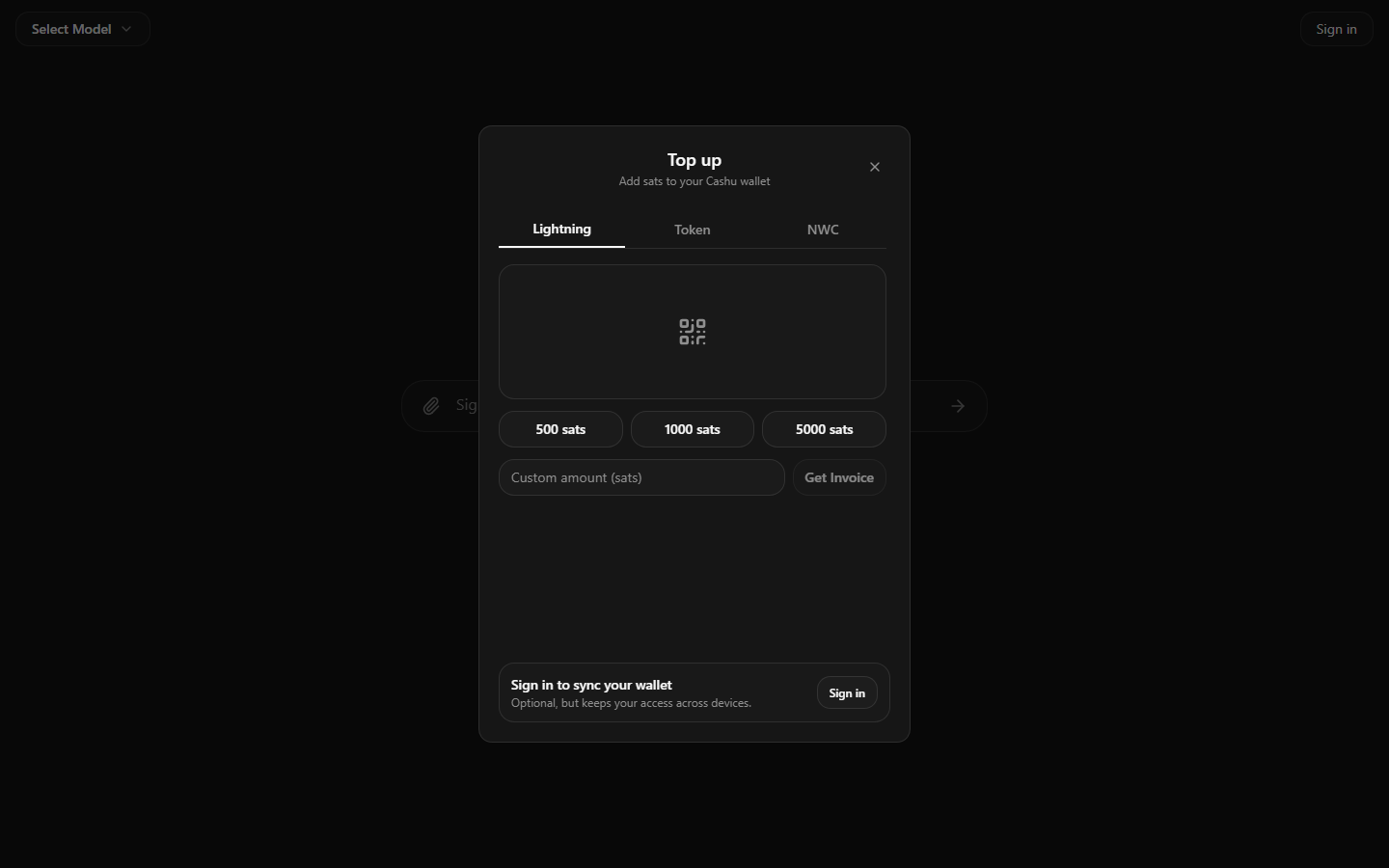
Routstr operates exclusively on Bitcoin's Lightning Network. This is not incidental—it is foundational. Lightning enables the sub-second, sub-satoshi micropayments that make per-query AI pricing economically viable without the overhead of traditional payment processors. Users fund interactions through any Lightning-compatible wallet; no fiat on-ramps, no stablecoin bridges, no exchange accounts required.
This Lightning-only approach has dual implications. On one hand, it preserves anonymity—Lightning payments, properly routed, reveal far less than credit card transactions or even on-chain Bitcoin. On the other, it creates friction for users unfamiliar with Lightning channel management or lacking inbound liquidity. In 2026, wallet UX has improved substantially, but Routstr remains firmly in the "Bitcoin-native" category rather than the "crypto-curious mainstream." No altcoins are accepted; the protocol's narrow focus reflects ideological consistency rather than commercial expansionism.
Security & custody
Routstr's non-custodial architecture is its defining security feature. Users never deposit funds to a platform-controlled wallet; each API call or chat interaction is settled atomically via Lightning invoice. There is no "balance" to steal, no withdrawal queue to freeze, no treasury to drain. The protocol itself is open source, permitting independent security audit and self-hosted deployment for the technically capable.
However, this model shifts operational burden to users. Key management, channel liquidity, and payment pathfinding all occur in user-controlled software. A lost private key means lost access; there is no support ticket to file. The peer-to-peer topology also means quality varies by which compute provider a user connects to—Routstr is infrastructure, not a curated service with uniform uptime SLAs. For threat models centered on state-level coercion or corporate data mining, this distributed fragility is preferable to centralized vulnerability. For users prioritizing convenience and recourse, it demands adjustment.
Who it's for — verdict
Routstr suits a specific but growing constituency: privacy absolutists, censorship-resistant infrastructure builders, and Bitcoin-native developers who view KYC as an unacceptable cost of AI access. It rewards technical literacy and tolerates rough edges. Journalists in hostile jurisdictions, researchers handling sensitive prompts, and developers building uncensorable applications will find its architecture aligned with their constraints.
The 7/10 overall score reflects genuine achievement in permissionless design offset by accessibility limitations. Routstr is not trying to be ChatGPT with better marketing—it is trying to ensure that AI access remains possible even when regulatory walls rise. For that mission, the trade-offs are coherent. For the average user seeking polished conversational AI without wallet setup, they are prohibitive. We recommend Routstr without reservation to its target audience, and with clear caveats to everyone else.
Community summary
Routstr is a permissionless, open-source AI protocol built on Nostr that lets users access AI services anonymously via Lightning payments—no account, no email, no identity verification required.
Pros
- + True zero-KYC, no-account access—no identity data collected ever
- + Non-custodial Lightning payments eliminate deposit risk
- + Open-source protocol enabling self-hosted, censorship-resistant deployments
- + Nostr-based architecture resists single-point-of-failure takedowns
- + No email or persistent identity required, enabling pseudonymous research
Cons
- − Lightning-only payments exclude users without Bitcoin infrastructure
- − No centralized support or dispute resolution mechanism
- − Variable service quality depending on peer compute provider
- − Gateway IP logging possibilities require VPN/Tor for maximal anonymity
Attributes
10 signalsStrengths
Guaranteed no KYC
P+25
No registration needed
P+5
Peer to peer network
P+2 T+5
Token-based login
P+1
Open source code
T+7
Decentralized network
T+5
Red flags
No Published Policies
T-3
Cautions
New service
T-4
Community contributed
Informational
API available